Ruben Abbou

Data Scientist specializing in ECG-AI and biosignal analysis. Almost five years building deep learning algorithms for disease detection from physiological signals — from clinical data curation and signal processing through regulatory submission.

Published in Heart Rhythm, The Lancet, and ACM CHI. FDA Breakthrough Device Designation. CE mark (Software as a Medical Device). Partnerships with Pfizer, AstraZeneca, Novartis.

Experience

Sep 2024 — Feb 2026

Senior Data Scientist (Level III)

Idoven · Remote (Madrid, Spain)

  • Led early detection research for cardiac amyloidosis on ~21K ECGs from ~3K patients; compared 9 deep learning architectures with Bayesian optimization, achieving AUC 0.88; co-authored publication in Heart Rhythm (2026)
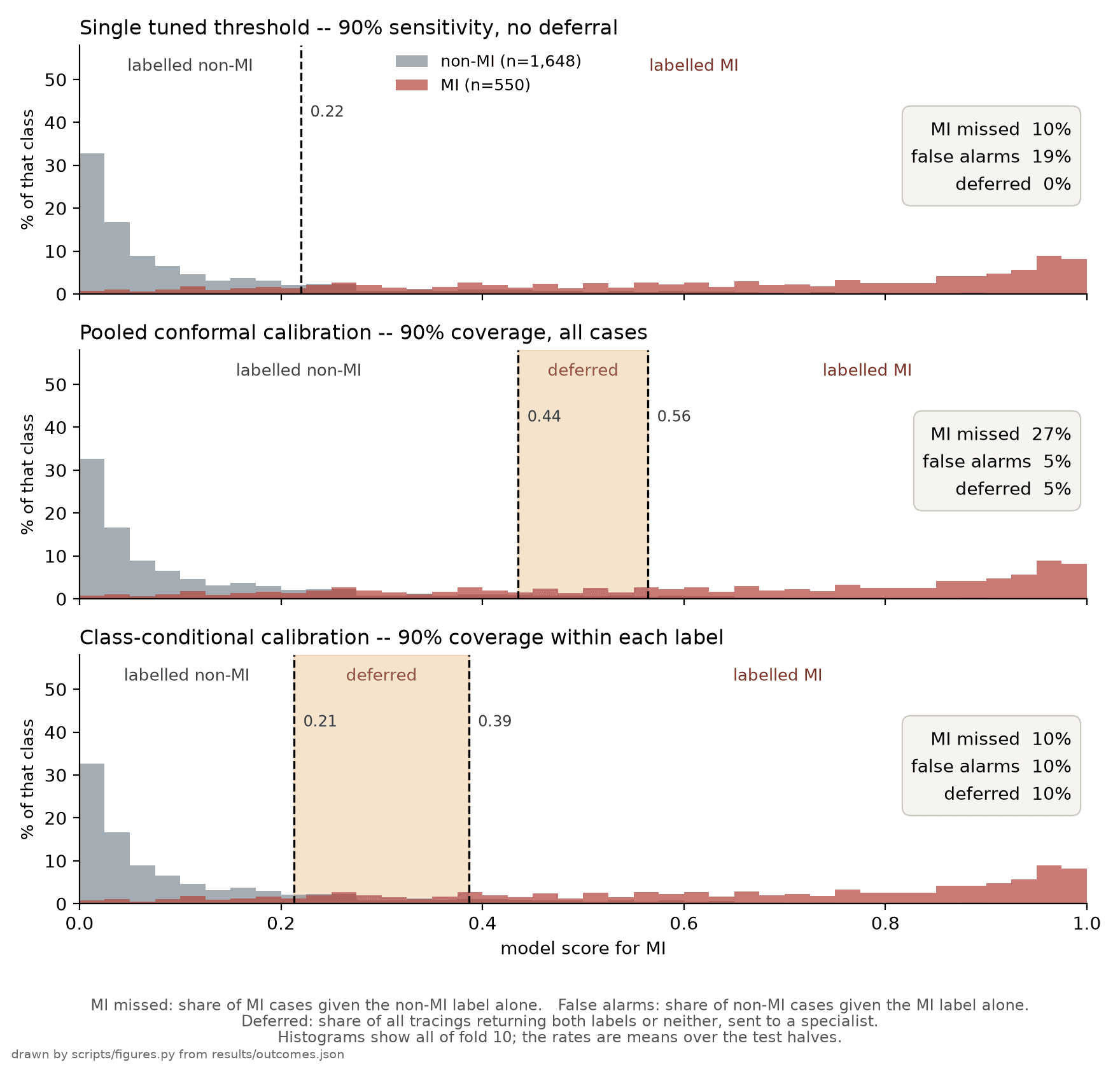
  • Tuned model operating thresholds and calibration for regulatory performance targets; extracted clinical validation metrics across patient subgroups; prepared SaMD technical documentation for CE mark submission
  • Built reproducible data pipelines to ingest and clean multi-site clinical data from European and US hospitals, achieving 4.4x processing speedup; designed data collection forms for AstraZeneca partnership
Hospital Puerta de Hierro (Madrid)Hospital Juan Ramon Jimenez (Huelva)Hospital Virgen de la Arrixaca (Murcia)Hospital Nuestra Señora de Candelaria (Tenerife)Northwestern Memorial Hospital (Chicago)UMCG GroningenHospital La Fe (Valencia)
AstraZeneca
Nov 2021 — Jun 2024

Data Scientist

Anumana · Boston, MA

  • Developed deep learning algorithm for early cardiac amyloidosis detection in partnership with Pfizer; defined target population, clinical indication for use, and statistical validation protocol contributing to FDA Breakthrough Device Designation
  • Curated patient cohorts from 10M+ EHR records across multiple US hospitals (Spark SQL, Kedro); trained CNN and Transformer models on GPU clusters for coronary disease risk stratification with Novartis; published in eClinicalMedicine (The Lancet, 2023)
  • Built NLP pipeline (BERT) to extract disease markers, symptoms, and lab results from unstructured Mayo Clinic patient notes; trained 3 gradient boosting models (AL, ATTR, combined amyloidosis) on the extracted clinical features achieving AUC 0.9; deployed in shadow mode alongside an ongoing Mayo Clinic amyloidosis clinical trial
  • Rebuilt flagship LVEF detection model from scratch — new cohorts (500K patients), updated architectures, and retraining — then built a lifetime Markov model projecting QALY gains and cost savings for payer adoption
Mayo Clinic Rochester (MN)Mayo Clinic Scottsdale (AZ)Mayo Clinic Jacksonville (FL)
PfizerNovartis
Jun 2021 — Mar 2024

Machine Learning Instructor

United Nations International School & Inspirit AI · New York, NY

  • Taught machine learning and deep learning to 200+ students at Inspirit AI (online ~30 students/cohort) and UNIS High School (UN International School, NYC); delivered content, coding sessions, and assignments across supervised/unsupervised learning, neural networks, computer vision, NLP, and ML ethics
  • Built end-to-end research projects 1-on-1 with each student — EEG signal analysis, Parkinson's disease detection, skin cancer classification — from idea framing to working code to presentable result
Jun 2019 — Sep 2019

Data Scientist Intern

CCC Intelligent Solutions · Chicago, IL

  • Built deep learning architecture using RNN and pre-trained MobileNet for vehicle damage classification on 270K images; 5-point sensitivity improvement
  • Evaluated telematics data inclusion in production models; presented integration recommendations to senior data science leadership

Research

Jun 2020 — Jun 2021

Deep Learning Graduate Researcher

University of Chicago SAND Lab · Chicago, IL

Prof. Heather Zheng

  • Developed invisible adversarial ML patches for jamming facial recognition cameras; translated digital FGSM attacks to physical domain on robust body pose models
  • Trained PixelCNN generative model to generate synthetic biometric sensor maps for testing impersonation attacks on EMS authentication devices; contributed to CHI 2021 publication
Jun 2019 — Mar 2020

Computer Vision and Optimization Researcher

University of Chicago · Chicago, IL

Prof. Tingran Gao

  • Developed non-convex optimization algorithms extending total variation methods to 3D graph domains; applied to filtering patterns from marine biology specimens (Bivalvia shells)

Education

The University of Chicago

M.S. Computational and Applied Mathematics (ML specialization) · 2020–2022

B.S. Computational and Applied Mathematics · 2016–2020

B.A. Statistics · 2016–2020

Dean's ListSusan H. Rudolph Scholarship

Publications

Google Scholar ↗
2023Journal
2021Conference

User Authentication via Electrical Muscle Stimulation.

Chen Y., Zheng H., et al., Abbou R., et al.

ACM CHI 2021

Conferences

Nov 2025ePoster
Nov 2025Pitch session

WILLEM: an AI-powered ECG analysis platform for arrhythmia detection

ESC Digital & AI Summit 2025

Berlin, Germany

Skills

Programming

PythonSQLRMATLABbashLaTeX

ML & DL Frameworks

PyTorchTensorFlowscikit-learnXGBoostLightGBM

Architectures

CNNLSTMTransformerVision TransformerResNetEfficientNetGNNBERTGANVAEPixelCNN

Methods

Bayesian OptimizationOptunaEnsemble MethodsModel CalibrationUncertainty QuantificationPropensity Score MatchingSelf-Supervised LearningTransfer LearningNLP/NERstatsmodels

Medical AI & Biosignals

Biosignal Processing (ECG, EEG)biosppyTime-series ClassificationPatient StratificationClinical ValidationMulti-site Data IntegrationDisease Progression ModelingCRF Development

Data Engineering

SparkKedropandasNumPypyarrowOpenCV

MLOps

DockerMLflowAWSGCPGPU ComputingCI/CDPoetryGit

Domain

FDA Regulatory (510k, Breakthrough Device)CE Mark (SaMD)Clinical TrialsHEOR/QALYPharma PartnershipsIFU DesignWearable Device Pipelines

Languages

French (Native)English (Fluent)Spanish (Intermediate)